
Britain’s Solar Panels, Storage and the Value of Energy Infrastructure
- News
9/09/2025
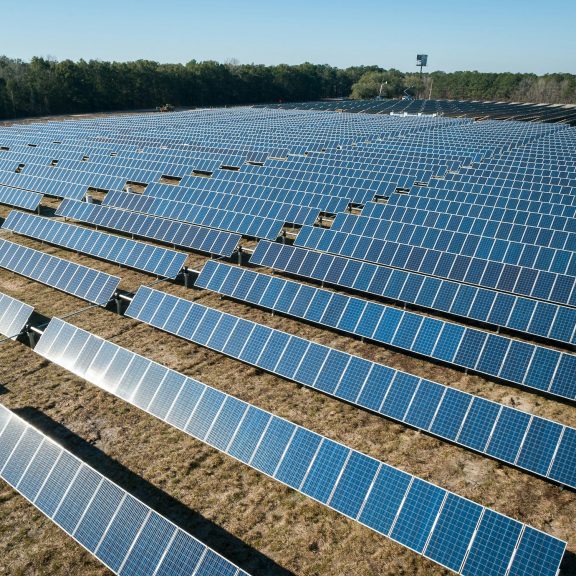
The UK energy landscape is moving fast. In just the first half of 2025, Britain’s solar panels generated more electricity than in the whole of 2024. By mid-August, photovoltaic (PV) systems had already provided enough power to supply 5.2 million homes for an entire year.
This is a striking milestone. Solar now provides around 10% of England and Wales’ electricity, a figure that would have seemed improbable a decade ago. While exceptional sunshine has helped, the bigger story is structural:
- A 20% rise in installed solar capacity since 2023
- Policy support, from rooftop mandates to faster grid connections
- And most crucially, the increasing integration of battery storage to balance evening demand
The lesson is clear: clean energy capacity is scaling at speed. The challenge is no longer whether solar will play a central role in the UK’s energy mix, but how quickly we can adapt systems, investments, and infrastructure to keep pace.
The Battery Storage Breakthrough
This context makes last month’s announcement all the more significant. The UK’s National Wealth Fund (NWF), together with Australia’s Aware Super and investor Equitix, has committed £500 million to battery storage developer Eelpower Energy.
Eelpower has three “ready-to-build” projects in Scotland and England, each with an output of 50MW and storage of 100MWh – enough to power 240,000 homes for two hours. Longer term, the consortium aims to deliver 1GW of new capacity, helping the UK move from today’s 4.5GW of battery storage toward the government’s 23–27GW target by 2030.
This injection of capital is designed to “crowd in” private investment into a sector often viewed as high-risk. For years, battery storage has suffered from volatile revenues and limited equity backing. But with long-term institutional investors now entering the market, the fundamentals are beginning to shift.
A Broader Wave of Activity
The Eelpower deal is part of a much bigger story. Recent months have seen:
- NatPower UK secure £1 billion in private funding for a 1GW/8GWh battery site near Middlesbrough, set to be the UK’s largest.
- Highview Power raise £300 million for a Manchester plant using liquid air technology to deliver long-duration energy storage.
- Record levels of planning activity: over 100 new applications in Q2 2025 alone, totalling 8.4GW of additional battery storage.
Paired with the solar surge, these developments underline how quickly the UK’s clean power infrastructure is scaling—and how urgently the valuation landscape must adapt.
The Asset Valuation Perspective
At Hickman Shearer, we see battery storage evolving from niche experiment to mainstream investment-grade infrastructure. For investors and operators, three themes stand out:
- Equity-backed growth reduces risk: When sovereign funds and pensions make long-term commitments, projects gain credibility and stability. This improves bankability and strengthens asset values.
- Revenue models remain complex: Storage assets earn income from grid services and energy trading, streams that can fluctuate sharply. Yet revenues are improving. Early 2025 saw average storage revenues quadruple to around £92,000 per MW, evidence that the market is maturing.
- Scale and diversification matter: Developers with multiple sites, like Eelpower and NatPower, can spread operational risk and secure better returns. Meanwhile, novel technologies such as liquid air storage demand tailored valuation approaches to reflect their unique profiles.
Opportunities and Risks Ahead
The UK’s twin surges in solar and storage highlight the opportunities and risks facing asset owners, investors, and policymakers. Clean power growth is:
- Reshaping investment decisions across infrastructure portfolios
- Creating pressure on grid capacity and system design
- Forcing a re-think of asset valuation models to capture both long-term resilience and short-term volatility
The speed of this transition will depend on unlocking underutilised assets, scaling the right projects, and aligning capital with infrastructure needs.
Looking Forward
Battery storage is becoming a cornerstone of the UK’s clean energy future, just as solar has moved from marginal to mainstream. Together, they are reshaping the way energy systems are built, financed, and valued.
For investors, lenders, and operators, the implications are profound. Storage assets will not simply be judged on today’s trading revenues, but on their ability to deliver system resilience, scalable capacity, and policy-aligned growth over decades.
As the authority in capital assets advisory, our role is to help organisations navigate this fast-changing environment, ensuring assets are valued, managed, and positioned to unlock their full potential in a clean energy economy.
About Hickman Shearer
At Hickman Shearer, we specialise in delivering exceptional RICS and ASA certified capital asset valuation, management, and sales services. Our expertise span a wide range of global industries, ensuring that we provide tailored and insightful commercial valuations and equipment valuation services to meet your unique needs. With a strong track record of delivering robust and independent advice, we are committed to supporting businesses in achieving their strategic objectives. Find out more here >> About Us
Sign up to our Industry Insights Newsletter to stay up to date with the latest industry updates >> Subscribe
Follow our developments on Linkedin >> Follow Us